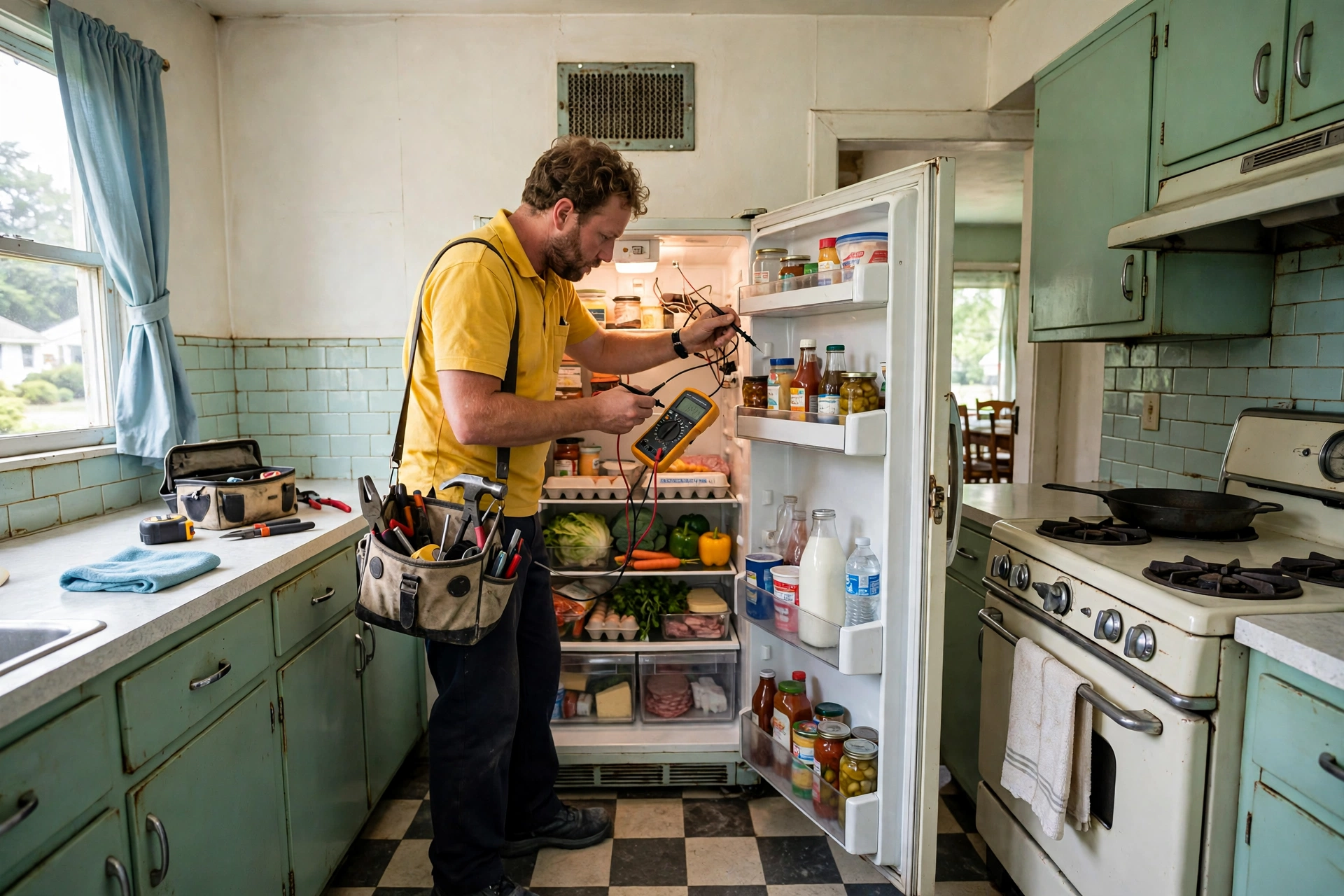
A failing refrigerator announces itself quietly at first: milk that turns early, a freezer that frosts over, a motor that runs and runs. We repair all the common configurations, French door, side by side, bottom freezer, and the older top freezer units that anchor second kitchens and garage setups. Capitol Heights households tend to discover refrigerator trouble in batches: after storms, during heat waves, and in the first cold week, when machines that were quietly aging all decide together.
The Capitol Heights housing stock shapes the work. Capitol Heights is a close in, established community of postwar single family homes and garden apartments near the District line, where practical, durable appliances get fixed and put back to work. Add summer storm flickers, mineral heavy water, and the reality that most households run their appliances hardest at the same hours, and the local fault patterns become predictable in the best way: we arrive already suspecting the right things.
Refrigerator Repair Problems We Diagnose and Repair in Capitol Heights
Cooling complaints come first
A cold freezer beside a warm refrigerator is a distribution problem, not a cooling problem, and it is one of the most repairable faults on the platform. When the fresh food side runs warm, airflow is the first suspect: an evaporator fan that quit, a damper door stuck closed, or condenser coils blanketed in dust and pet hair. A unit that runs constantly and still loses ground may be low on refrigerant, but that diagnosis comes last, after fans, seals, and coils have been cleared. Door gaskets that no longer seal let warm room air pour in around the clock, frosting the evaporator and exhausting the compressor.
Frost, ice, and water where they do not belong
Click, hum, silence: that pattern is the compressor start relay failing, and it fools many owners into pricing a new refrigerator they do not need. Heavy frost on the freezer back wall means the defrost system has failed: heater, timer or board, or the defrost thermostat, and the evaporator is choking on its own ice. Puddles under the produce drawers point to a defrost drain frozen or clogged with debris, so melt water takes the only path left, into the cabinet. Ice maker trouble is its own family: a fill valve that will not open, a frozen supply tube, or a mold thermostat that never calls for a harvest.
Noises, leaks, and electrical faults
Control boards fail with heat and age; the test is whether the board sends voltage to the component that is not running, not guesswork. Most refrigerator noises can be traced by ear: fan blades nicking frost, worn compressor mounts, or a supply line drumming against the back panel. Water behind the refrigerator is typically the inlet line or a valve fitting weeping, and it can damage a floor for weeks before anyone pulls the unit out. In Capitol Heights, that board verdict is written down either way, replace or monitor, so the next call starts from evidence.
How We Diagnose Refrigerator Repair in Capitol Heights
We begin with the numbers: fresh food and freezer temperatures, frost pattern on the coil, and compressor draw. Those three readings sort most cooling faults into the right family before a single part comes off. Basement laundry in the older housing lives damp, and the diagnosis starts from that fact.
Recent Project: Refrigerator Repair in District Heights
A call from District Heights: French door refrigerator warming up over a weekend. Testing found the evaporator fan motor had failed and frost had bridged the air channels. We replaced the fan motor, cleared the frost, and verified cabinet temperatures over a full cooling cycle. The visit record stays with the Capitol Heights household, readings and part numbers included.
Refrigerator Repair Cost in Capitol Heights, MD
What moves the figure is the part and the access: a gasket or start device is a short visit, while a compressor means recovery equipment, a drier, and a recharge before the cabinet cools again. One figure is quoted in writing after diagnosis, and the diagnostic fee folds into the repair when you proceed, which is the arrangement the published guides describe. County water hardness scales elements and inlet valves here on a predictable schedule.
Why Capitol Heights Calls Capitol Heights Appliance Repair Co for Refrigerator Repair
Refrigerators reward diagnosis because the same symptom, warm milk, can be a $40 relay or a compressor. We test in the order that protects your money: airflow, then defrost, then controls, then the sealed system. Every job on this page ends with the appliance run through its work in front of us. A repair that has not performed is a theory, and we do not leave theories running in your kitchen. Landlords around Walker Mill and Fairmount Heights get findings in writing, per unit, as standard.